How Often Should Bronx Commercial Building Owners Inspect Their Roofs? A 2026 Maintenance Guide
Commercial building owners in the Bronx, NY, need a clear roofing inspection schedule to protect their investment and avoid costly repairs. This guide covers how often inspections should happen, what conditions to look for, and when to call experienced commercial roofing contractors.
Flat roofs are standard across commercial buildings in the Bronx, from warehouses near the Hunts Point Food Distribution Center to mixed-use buildings in Mott Haven and Fordham. These low-slope systems collect water, debris, and weather stress differently than pitched roofs, making regular inspections especially important. Working with qualified commercial roofing contractors ensures those inspections are thorough and well-documented.
How Often Should You Inspect a Commercial Roof?
Most commercial roofs in New York City should be inspected at least twice a year. Industry guidance points to a spring inspection after winter ends and a fall inspection before cold weather returns.
Spring inspections catch freeze-thaw damage that built up over winter. Fall inspections ensure drains, seams, and flashing are tight before snow and ice arrive. Beyond those scheduled visits, an inspection after any major storm is also smart practice for Bronx building owners. Many commercial roofing contractors recommend scheduling both visits at the start of the year so nothing gets overlooked.
What Does Bronx Weather Do to a Flat Roof?
Bronx winters are hard on flat roofing systems. Temperatures can swing dramatically from day to night, causing materials to expand and contract repeatedly. This freeze-thaw cycle is one of the top causes of membrane cracking and seam separation. Standing water can freeze overnight and thaw the next afternoon, forcing open small gaps and turning minor issues into active leaks. Ice damming near parapet walls and drains is also common in neighborhoods like Pelham Bay and Riverdale.
Summer brings different stress. UV exposure on dark membrane surfaces causes blistering and accelerated aging. Heat-island conditions in densely built areas like the South Bronx can push rooftop temperatures significantly above ambient air temperatures.
What Do Inspectors Look for on Bronx Commercial Roofs?
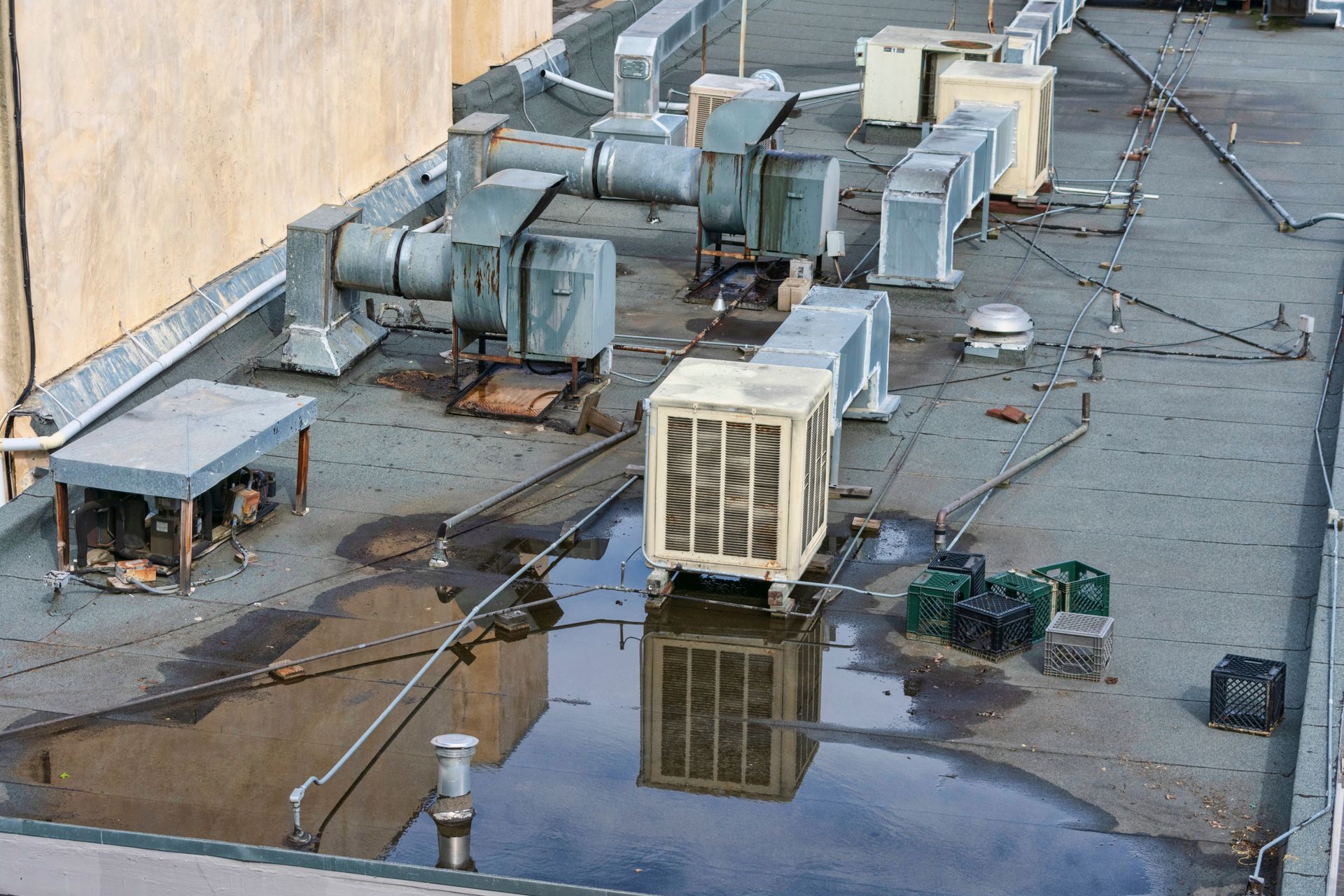
A thorough inspection typically covers membrane condition, including blisters, cracks, and punctures; flashing integrity around parapet walls, skylights, HVAC curbs, and vents; drain and scupper clearance; ponding water areas that suggest low spots or clogged drainage; seam adhesion on TPO, EPDM, or modified bitumen systems; condition of any roof coatings; and signs of biological growth near shaded areas.
If the building has a flat roof system, checking penetration points is especially important because those are the spots most likely to fail first.
Contractor Inspection vs. Owner Walkthrough
A basic owner walkthrough after a storm can catch obvious issues like debris pileup or blocked drains, but it is not a substitute for a professional inspection. Contractors use tools and trained eyes to spot early-stage membrane failure, compressed insulation, and subtle flashing lifts that an untrained observer might miss. Professional inspections may also be required to keep manufacturer warranties valid.
NYC Building Code and Inspection Requirements
New York City regulations place responsibility on property owners to keep roofs in good repair. Neglecting routine checks can contribute to code violations if leaks or structural issues go unaddressed. Building owners managing properties under a lease or co-op arrangement may have additional contractual inspection obligations. Engaging commercial roofing contractors who understand local code requirements helps ensure compliance and proper documentation.
When Should You Call a Contractor Instead of Waiting?
Call a commercial roofing contractor immediately if you notice interior water stains after rain, visible sagging or soft spots on the roof surface, blistering or bubbling membrane larger than a palm-size area, separated or lifted flashing around HVAC units or parapet edges, or standing water that remains 48 hours after a rain event. These signs mean waiting for a scheduled inspection could allow the problem to grow significantly. Reaching out to commercial roofing contractors at the first sign of trouble can prevent a manageable repair from becoming a costly replacement.
Does Roof Age Change How Often You Should Inspect?
Yes. A newer system in good condition may perform well with two inspections per year. A system approaching the end of its service life should be inspected three or four times per year. Older roofing systems, particularly those installed before modern single-ply membranes became standard, can hide deterioration beneath intact-looking surfaces. More frequent reviews help owners decide between ongoing maintenance and full replacement before an emergency forces the issue. Consulting commercial roofing contractors early in that decision process ensures owners have accurate cost and condition information before committing to a path forward.
Partner With the Right Roofing Team for Your Building
Staying ahead of roof problems starts with a consistent inspection schedule and a contractor who knows Bronx commercial buildings. Fort-Cica Roofing & General Contractors, Inc. has been serving commercial property owners in the Bronx and surrounding boroughs since 1954. The team can schedule professional inspections, identify issues early, and recommend the right maintenance path for your specific roof system.
To schedule an inspection or request a free estimate, call
718-585-9188 or
contact the team online. You can also find and review
Fort-Cica Roofing & General Contractors, Inc. on Google.
Frequently Asked Questions
How Many Times a Year Should a Commercial Roof Be Inspected?
Most commercial roofs benefit from at least two professional inspections per year, typically in spring and fall. Older systems or roofs with known issues may need more frequent attention.
Can a Building Owner Inspect Their Own Roof?
A basic owner walkthrough can identify obvious debris or drainage problems, but it does not replace a professional inspection. Trained contractors detect hidden membrane damage and compromised flashing that an untrained eye can easily overlook.
What Bronx Weather Conditions Cause the Most Roof Damage?
Freeze-thaw cycles in winter and intense UV exposure in summer are the two biggest seasonal threats to Bronx commercial flat roofs. Storm events with heavy rain or high winds can also cause sudden damage requiring immediate attention.
Does Skipping Roof Inspections Affect My Warranty?
Many roofing manufacturer warranties require documented maintenance to remain valid. Skipping professional inspections may void coverage and leave building owners responsible for the full cost of repairs that could otherwise have been covered.